
Portugal is widely recognized for having one of the more inclusive immigration and nationality systems in Europe. For many immigrants, obtaining Portuguese nationality represents stability, full civic participation, and long-term security. Understanding the basic legal framework is an important first step.
Portuguese Nationality Law: An Overview
Portuguese nationality is regulated by the Nationality Law and related regulations. The law allows foreign nationals to apply for citizenship through several pathways, depending on their personal situation, length of residence, and family ties to Portugal.
Nationality can be acquired by origin, by marriage or partnership, by descent, or through legal residence. Each pathway has specific requirements and documentation.

Nationality Through Legal Residence
One of the most common routes for immigrants is nationality through legal residence. In general, applicants must have legally resided in Portugal for a minimum number of years, hold a valid residence permit, and demonstrate a basic knowledge of the Portuguese language.
Applicants are also expected to show ties to the Portuguese community and must not have been convicted of serious crimes. The exact requirements may vary depending on individual circumstances and current legal updates.
Nationality Through Marriage or Family Ties
Foreign nationals married to, or in a recognized partnership with, a Portuguese citizen may apply for nationality after a certain period of marriage or cohabitation. Similarly, children and descendants of Portuguese citizens may be eligible under specific conditions.
Family-based applications often require proof of relationship, registration of foreign documents in Portugal, and compliance with civil registry procedures.
Language and Integration Requirements
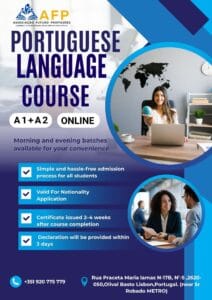
Knowledge of the Portuguese language is a key requirement in most nationality applications. This usually involves presenting a language certificate at an approved level or proof of education completed in Portuguese.
Language is seen not only as a legal requirement but also as an important part of integration and participation in Portuguese society.

The Importance of Legal Guidance
Portuguese nationality procedures can be complex and time-consuming. Documentation, deadlines, and legal interpretation play a significant role in the success of an application. Immigrants are encouraged to seek updated information from official sources or qualified legal professionals before submitting an application.
Community organizations and immigrant support associations also play an important role by providing guidance, information sessions, and practical support throughout the process.
Final Thoughts
Portuguese nationality offers immigrants the opportunity to fully participate in social, economic, and civic life in Portugal and the European Union. With the right information, preparation, and support, the path to nationality becomes clearer and more accessible.
Disclaimer
This article is for informational purposes only and does not constitute legal advice. Immigration and nationality laws may change over time, and individual circumstances can affect eligibility. Always consult official government sources or a qualified legal professional before submitting any applications.
Resources
• Serviço de Estrangeiros e Fronteiras (SEF) – www.sef.pt
• Portal da Justiça – Nationality Section – www.portaldajustica.gov.pt
• Portuguese Language Certificates – Instituto Camões, www.instituto-camoes.pt
• Immigrant Support Associations in Portugal – AFP – Associação Futuro Profissões, www.afp.org.pt
![boats docked near seaside promenade]](https://afppt.com/wp-content/uploads/2026/07/prb-sjoubfs-300x200.jpg)